Choosing the right health insurance plan is one of the most important financial and healthcare decisions you’ll make. The type of insurance plan you select affects not only your monthly premiums but also your choice of doctors, access to specialists, out-of-pocket expenses, and overall healthcare experience.
Among the most common health insurance options are Health Maintenance Organization (HMO) and Preferred Provider Organization (PPO) plans. While both provide comprehensive medical coverage, they differ significantly in network flexibility, referral requirements, costs, and convenience.
This detailed guide explains everything you need to know about HMO and PPO plans, compares their features, highlights their pros and cons, and helps you determine which option best fits your healthcare needs.
Table of Contents
- What is an HMO Plan?
- How HMO Plans Work
- Advantages of HMO Plans
- Disadvantages of HMO Plans
- What is a PPO Plan?
- How PPO Plans Work
- Advantages of PPO Plans
- Disadvantages of PPO Plans
- HMO vs PPO: Side-by-Side Comparison
- Which Plan Should You Choose?
- Frequently Asked Questions
- Conclusion
What is an HMO Plan?
A Health Maintenance Organization (HMO) is a managed healthcare plan designed to provide affordable healthcare through a network of approved doctors, hospitals, and specialists.
Members are generally required to choose a Primary Care Physician (PCP) who acts as the main healthcare provider. The PCP coordinates your medical care, provides routine treatment, and issues referrals whenever specialist care is needed.
HMO plans are known for their lower monthly premiums and predictable healthcare costs, making them popular among individuals and families looking for affordable insurance.
How HMO Plans Work
1. Primary Care Physician (PCP)
One of the defining features of an HMO plan is selecting a Primary Care Physician.
Your PCP is responsible for:
- Routine checkups
- Preventive care
- Diagnosing illnesses
- Prescribing medications
- Referring you to specialists
The PCP acts as your healthcare coordinator, ensuring your treatments remain organized and cost-effective.
2. Network-Based Coverage
HMO plans require members to receive care from healthcare providers within the insurance company’s network.
Except for emergencies, services received outside the network are usually not covered, meaning you’ll likely pay the entire medical bill yourself.
3. Specialist Referrals
Unlike other insurance plans, HMOs generally require referrals before visiting specialists.
For example, before seeing a:
- Cardiologist
- Orthopedic Surgeon
- Dermatologist
- Neurologist
your PCP must first evaluate your condition and provide an official referral.
4. Lower Healthcare Costs
One of the biggest advantages of HMO plans is affordability.
Most HMO plans offer:
- Lower monthly premiums
- Lower deductibles
- Fixed copayments
- Reduced out-of-pocket expenses
This makes budgeting for healthcare much easier.
5. Preventive Care Focus
HMO plans place a strong emphasis on preventive healthcare.
Most plans include coverage for:
- Annual physical exams
- Vaccinations
- Wellness screenings
- Blood pressure checks
- Diabetes screenings
- Cancer screenings
Many preventive services are covered with little or no additional cost.
6. Limited Out-of-Network Coverage
Outside of emergency situations, HMO plans generally do not pay for medical services received from providers outside their approved network.
This limitation is often the biggest disadvantage for people who travel frequently or already have preferred doctors outside the network.
Advantages of HMO Plans
HMO plans provide several important benefits:
- Lower monthly premiums
- Lower deductibles
- Affordable copayments
- Strong preventive healthcare coverage
- Coordinated medical care
- Simplified healthcare management
- Lower overall medical expenses
- Ideal for families and individuals with predictable healthcare needs
Disadvantages of HMO Plans
Although affordable, HMOs have certain limitations.
These include:
- Limited provider network
- PCP selection is mandatory
- Specialist referrals required
- Little or no coverage outside the network
- Less flexibility when choosing healthcare providers
What is a PPO Plan?
A Preferred Provider Organization (PPO) offers greater flexibility when selecting healthcare providers.
Unlike HMO plans, PPO members are not required to choose a primary care physician and can visit specialists directly without referrals.
PPO plans are ideal for individuals who value provider choice and want greater control over their healthcare decisions.
How PPO Plans Work
1. Large Provider Network
PPO plans maintain extensive provider networks that include:
- Primary care doctors
- Specialists
- Hospitals
- Clinics
- Diagnostic centers
Members may also receive treatment from providers outside the network.
2. No Primary Care Physician Required
Unlike HMOs, PPO plans do not require members to designate a PCP.
You may schedule appointments directly with any healthcare provider whenever necessary.
3. No Referrals Needed
One of the most attractive features of PPO plans is direct specialist access.
You can visit specialists such as:
- Cardiologists
- Dermatologists
- Neurologists
- Gastroenterologists
- Orthopedic Surgeons
without obtaining approval from another doctor.
4. In-Network and Out-of-Network Coverage
PPO plans provide coverage for both:
- In-network providers
- Out-of-network providers
However, you’ll typically save more money by staying within the network.
Out-of-network services remain covered but usually involve:
- Higher deductibles
- Larger coinsurance
- Increased out-of-pocket expenses
5. Greater Freedom
PPO plans offer maximum flexibility.
You can:
- Choose your doctors
- Change physicians anytime
- Visit specialists directly
- Receive care while traveling
- Continue seeing existing providers
6. Higher Costs
This flexibility comes at a price.
PPO plans generally include:
- Higher monthly premiums
- Higher deductibles
- Larger coinsurance
- Higher out-of-pocket maximums
Advantages of PPO Plans
Benefits include:
- Freedom to choose doctors
- No PCP requirement
- No referrals needed
- Larger provider networks
- Better coverage while traveling
- Out-of-network coverage available
- Faster specialist appointments
Disadvantages of PPO Plans
Potential drawbacks include:
- Higher monthly premiums
- Higher deductibles
- Larger copayments
- More expensive out-of-network care
- Greater financial responsibility
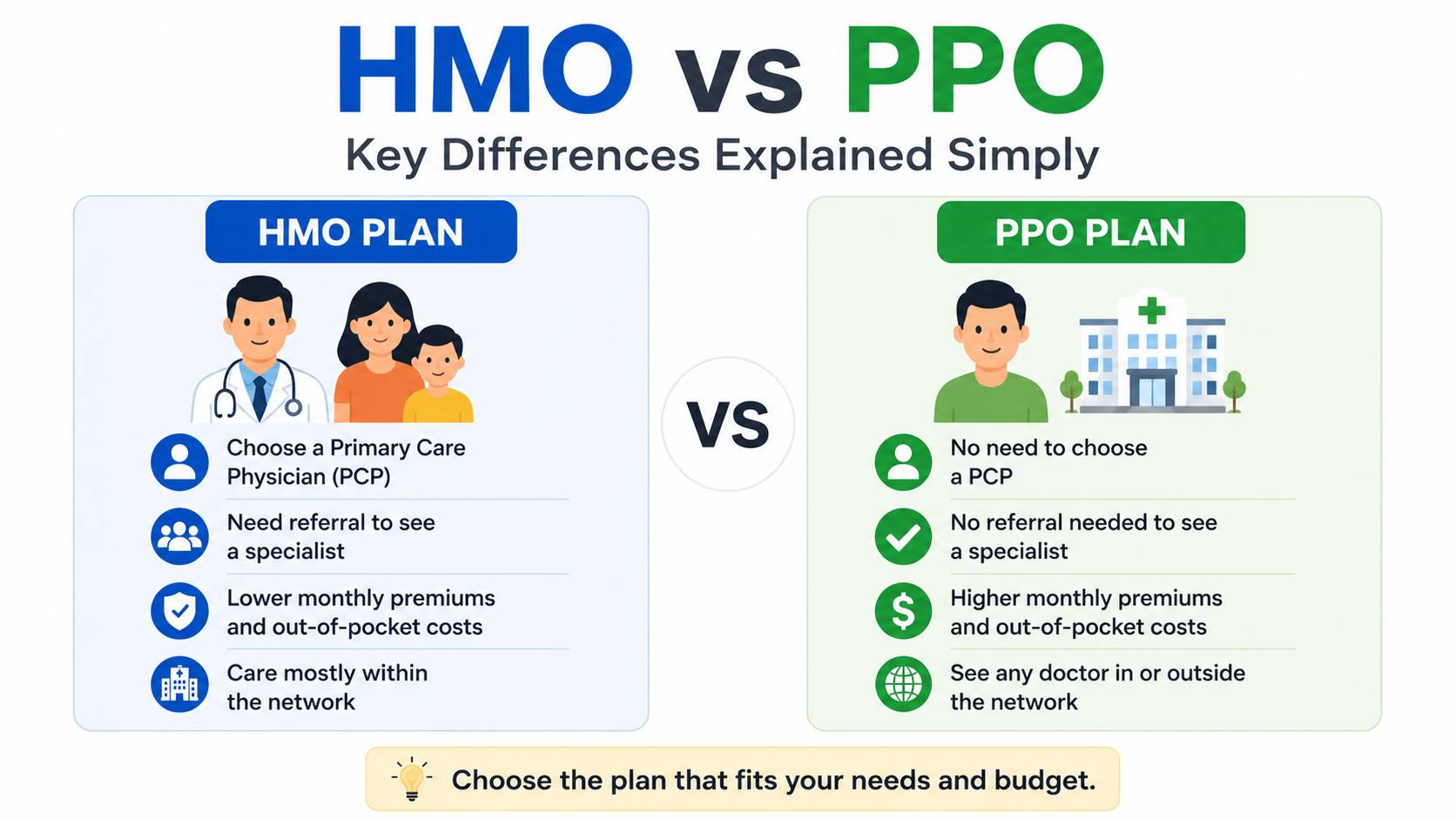
HMO vs PPO: Side-by-Side Comparison
| Feature | HMO | PPO |
|---|---|---|
| Monthly Premium | Lower | Higher |
| Deductible | Lower | Higher |
| Primary Care Physician | Required | Not Required |
| Specialist Referral | Required | Not Required |
| Provider Choice | Limited Network | Wide Network |
| Out-of-Network Coverage | Emergency Only | Covered at Higher Cost |
| Flexibility | Limited | Excellent |
| Best For | Budget-conscious individuals | People wanting maximum provider choice |
Which Plan Should You Choose?
The best health insurance plan depends on your medical needs, budget, and personal preferences.
Choose an HMO Plan if:
- You want lower monthly premiums.
- You rarely visit specialists.
- You don’t mind selecting a primary care physician.
- You prefer predictable healthcare costs.
- Most of your doctors are already within the HMO network.
Choose a PPO Plan if:
- You want complete freedom in choosing healthcare providers.
- You frequently visit specialists.
- You travel often.
- You already have preferred doctors outside a network.
- You’re comfortable paying higher premiums for greater flexibility.
Frequently Asked Questions (FAQs)
What is the biggest difference between HMO and PPO plans?
The primary difference is flexibility. HMO plans require members to use network providers and obtain referrals for specialists, while PPO plans allow direct access to specialists and cover both in-network and out-of-network providers.
Which plan is cheaper?
HMO plans generally have lower monthly premiums, deductibles, and out-of-pocket costs than PPO plans.
Can I see a specialist without a referral?
With a PPO plan, yes. Most PPO plans allow you to visit specialists directly. HMO plans usually require a referral from your primary care physician.
Does PPO cover out-of-network doctors?
Yes. PPO plans typically provide coverage for out-of-network healthcare providers, although you’ll pay more than you would for in-network services.
Which plan is better for families?
Families looking for affordable healthcare often choose HMO plans due to lower premiums and predictable costs. Families wanting greater flexibility and broader provider access may prefer PPO plans.
Is emergency care covered outside the network?
Yes. Both HMO and PPO plans generally cover emergency medical services regardless of whether the provider is in-network.
Conclusion
Both HMO and PPO health insurance plans offer valuable medical coverage, but they are designed for different healthcare priorities.
An HMO plan is an excellent choice if you want lower costs, coordinated care, and comprehensive preventive services while staying within a defined provider network.
A PPO plan, on the other hand, is ideal if you value flexibility, direct access to specialists, and the freedom to choose healthcare providers without referrals—even if it means paying higher premiums and out-of-pocket costs.
Before selecting a plan, carefully compare premiums, deductibles, provider networks, referral requirements, and expected healthcare usage. Evaluating your medical needs, financial situation, and preferred level of flexibility will help you choose the health insurance plan that provides the best balance between cost and coverage for you and your family.