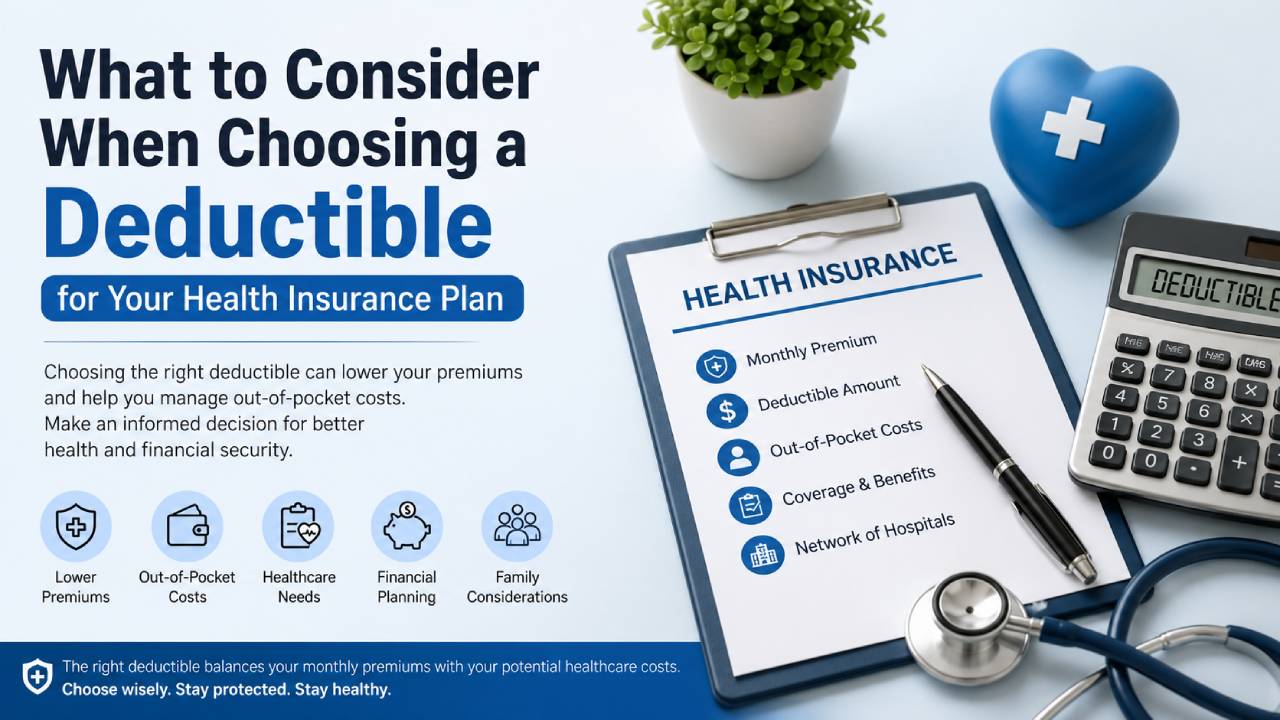
Selecting the right health insurance plan involves numerous decisions, one of the most important being the choice of deductible.
The deductible is the amount you must pay out of pocket before your insurance starts covering costs.
Choosing the right deductible is crucial as it directly impacts your monthly premiums, out-of-pocket expenses, and overall healthcare costs.
In this guide, we will explore what deductibles are, factors to consider when choosing one, how deductibles affect premiums, the relationship between deductibles and different types of health insurance plans, and how to select the deductible that best suits your needs.
Table of Contents
- Understanding Deductibles
- Factors to Consider When Choosing a Deductible
- How Deductibles Impact Premiums
- Types of Health Insurance Plans and Deductibles
- Choosing the Right Deductible for Your Needs
- FAQs
- Conclusion
Understanding Deductibles
A deductible is the amount of money you must pay for covered healthcare services before your insurance plan starts to pay. For example, if you have a $1,000 deductible and you receive a medical bill for $1,500, you are responsible for paying the first $1,000, and your insurance will cover the remaining $500 (assuming no other cost-sharing arrangements like coinsurance or copayments apply).
Deductibles can vary widely depending on the type of health insurance plan you have and can range from a few hundred dollars to several thousand dollars. Generally, plans with lower monthly premiums have higher deductibles, while plans with higher premiums tend to have lower deductibles.
Factors to Consider When Choosing a Deductible
When choosing a deductible for your health insurance plan, several factors should be taken into account:
1. Financial Situation
Consider your financial situation and how much you can afford to pay out of pocket for healthcare expenses. If you have sufficient savings to cover a higher deductible in case of a medical emergency, you may opt for a plan with a lower monthly premium and a higher deductible.
2. Healthcare Needs
Assess your healthcare needs and anticipated medical expenses. If you expect to require frequent medical care, ongoing treatments, or prescription medications, you may prefer a plan with a lower deductible to minimize out-of-pocket costs.
3. Risk Tolerance
Evaluate your risk tolerance and comfort level with uncertainty. A higher deductible means you’ll pay more out of pocket before your insurance kicks in, but it also typically translates to lower monthly premiums. If you’re generally healthy and don’t anticipate needing extensive medical care, you may be comfortable with a higher deductible.
4. Access to Savings
Consider whether you have access to health savings accounts (HSAs) or flexible spending accounts (FSAs), which allow you to set aside pre-tax dollars to pay for qualified medical expenses. Having these accounts can help offset the financial burden of a higher deductible.
5. Family Considerations
If you’re selecting a health insurance plan for your family, take into account the healthcare needs of all family members, including dependents. A higher deductible may be more manageable for a single individual but could pose a financial burden for a family with multiple dependents.
6. Lifestyle Factors
Consider your lifestyle factors and the likelihood of needing medical care. For example, if you participate in high-risk activities or have a chronic medical condition, you may want to prioritize lower out-of-pocket costs by selecting a plan with a lower deductible.
How Deductibles Impact Premiums
The relationship between deductibles and premiums is inverse: as one increases, the other decreases. Plans with higher deductibles typically have lower monthly premiums, while plans with lower deductibles tend to have higher premiums. This is because insurance companies assume more financial risk with lower deductibles, so they charge higher premiums to offset potential claims.
For example, a health insurance plan with a $500 deductible may have a higher monthly premium compared to a plan with a $5,000 deductible. The higher deductible plan requires you to pay more out of pocket before your insurance starts covering costs, but it also comes with lower monthly premiums.
When choosing a deductible, it’s essential to strike a balance between your monthly budget and your ability to cover out-of-pocket costs. While opting for a higher deductible can help lower your monthly premiums, it also means you’ll pay more upfront if you need medical care.
Types of Health Insurance Plans and Deductibles
Different types of health insurance plans have varying structures for deductibles.
1. Health Maintenance Organization (HMO) Plans
HMO plans often have lower deductibles but require individuals to seek care from a network of providers. Out-of-network care may not be covered, except in emergencies.
2. Preferred Provider Organization (PPO) Plans
PPO plans offer more flexibility in provider choice and often have higher deductibles than HMO plans. However, individuals can see both in-network and out-of-network providers, although out-of-network care may come with higher costs.
3. Exclusive Provider Organization (EPO) Plans
EPO plans combine elements of HMO and PPO plans and typically have moderate deductibles. They offer coverage for in-network providers only, but referrals are not required for specialist care.
4. Point of Service (POS) Plans
POS plans have similar deductible structures to HMO and PPO plans and may offer coverage for both in-network and out-of-network providers. Referrals are generally required for specialist care.
5. High-Deductible Health Plans (HDHPs) with Health Savings Accounts (HSAs)
HDHPs come with high deductibles and lower premiums. Individuals can contribute to an HSA to save for medical expenses tax-free, which can help offset the higher out-of-pocket costs associated with the deductible.
Choosing the Right Deductible for Your Needs
When choosing a deductible for your health insurance plan, it’s essential to consider your individual and family healthcare needs, financial situation, and risk tolerance.
Steps to Help You Choose
- Evaluate your financial situation.
- Consider your healthcare needs.
- Compare available insurance plans.
- Factor in family healthcare requirements.
- Reassess your plan annually.
- Seek professional advice if needed.
- Consider the trade-offs between premiums and deductibles.
- Plan for unexpected medical expenses with emergency savings or an HSA.
FAQs
What is a deductible in health insurance?
A deductible is the amount you pay out-of-pocket for healthcare services before your insurance begins to cover costs.
How does a high deductible affect premiums?
High deductibles generally result in lower monthly premiums, but you pay more out-of-pocket before coverage kicks in.
What should I consider regarding my healthcare needs?
Consider your overall health, frequency of doctor visits, and potential medical expenses when choosing a deductible.
How does my financial situation influence deductible choice?
Choose a deductible you can comfortably afford to pay out-of-pocket in case of medical expenses, balancing it against your premium payments.
Conclusion
Choosing the right deductible for your health insurance plan requires careful consideration of various factors, including your financial situation, healthcare needs, and risk tolerance.
By understanding how deductibles work, evaluating your options, and considering your individual circumstances, you can select a deductible that strikes the right balance between cost and coverage.
What works for one person may not work for another, so it’s essential to assess your needs and priorities carefully. By taking the time to evaluate your options and make an informed decision, you can ensure that you have the coverage you need to protect your health and financial well-being.
As your circumstances change over time, such as changes in income, family size, or health status, be sure to reassess your deductible and coverage options annually to ensure that you’re still getting the best value for your healthcare dollars.